Trachymyrmex
A fungus garden that moves sand.
Fungus-gardening ants of sandy soils; the garden and its substrate come first.
Trachymyrmex septentrionalis research from Florida; not a tested captive fungus-garden protocol.
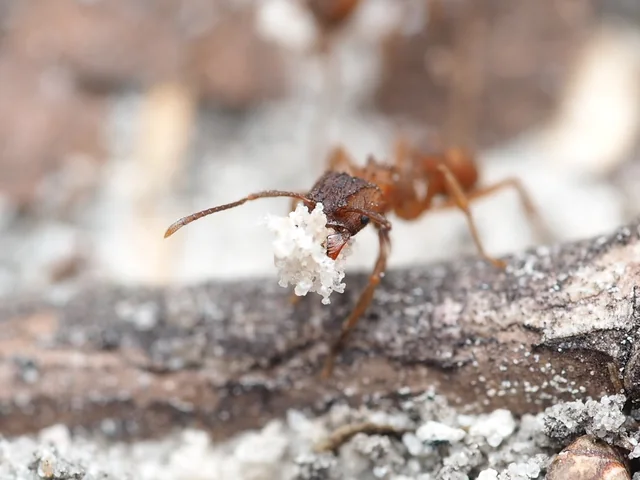 Example photograph · Trachymyrmex septentrionalis · workerPhoto: Brighton Lee · Source · CC0 1.0Full original frame; modified: resized and converted to WebP. No retouching. Not your colony or an identification reference.Example species photograph · not an identification reference · not to scale
The fungus garden comes first
T. septentrionalis is a fungus-gardening ant. A 2023 study reported that workers respond to chemical cues from the garden pathogen Trichoderma to keep their gardens clean.
Source: Kyle et al. (2023) · Trachymyrmex septentrionalis and Trichoderma cues · AntWiki · Trachymyrmex
In your setup
Treat the garden as part of the colony. Offer small amounts of substrate, record what is incorporated and remove uneaten material before it molds. Do not use a leaf-cutter feeding routine.
Deep digging in sand
In a Florida study of colonies planted in layered sand columns, T. septentrionalis moved large amounts of sand both onto the surface and below ground over a season.
Source: Tschinkel & Seal (2016) · Bioturbation by Trachymyrmex septentrionalis
In your setup
Expect excavation and record nest changes with dates. Field soil conditions are not a tested enclosure target.
Names have changed
The genus has been split taxonomically. Some North American species once placed in Trachymyrmex, such as M. turrifex, are now in Mycetomoellerius. T. septentrionalis stays in Trachymyrmex.
Source: AntWiki · Trachymyrmex
In your setup
Record the name and identification source you used, and leave the species blank if unsure.
Record observations without predicting a flight
In your setup
A winged ant at a nest, a flying swarm and a queen on the ground are different observations. Record the local date, approximate area and identification confidence. This guide does not provide a regional flight forecast.
Build a record for this colony
In your setup
Log dated food responses, reservoir and containment checks, and worker and brood estimates. Mark estimates as estimates and leave unknown facts blank. These notes do not fill in or alter your saved colony profile.
Before acquiring or moving ants
Consult the library’s movement guidance and official sources and the authorities relevant to your location.
Sources and review
Research statements link to their sources. “In your setup” contains practical keeper suggestions, not findings tested for every species. Source check: 2026-10-20.
- Kyle et al. (2023) · Trachymyrmex septentrionalis and Trichoderma cues
Primary study of garden hygiene behavior.
- Tschinkel & Seal (2016) · Bioturbation by Trachymyrmex septentrionalis
Primary Florida study of soil movement by colonies.
- AntWiki · Trachymyrmex
Genus overview, current composition and literature summary.
Keep your own field notes.
Record care, dated counts and what you observe. Species and counts can stay blank when you do not know them.
Open ANTSFree accounts are open. Opening the app does not create an account or change your records.