Myrmica
Species first. Containment always.
Separate native Myrmica from introduced M. rubra before making keeping or movement decisions.
M. rubra in Maine is an invasive, stinging species example; this is not a recommendation to acquire it.
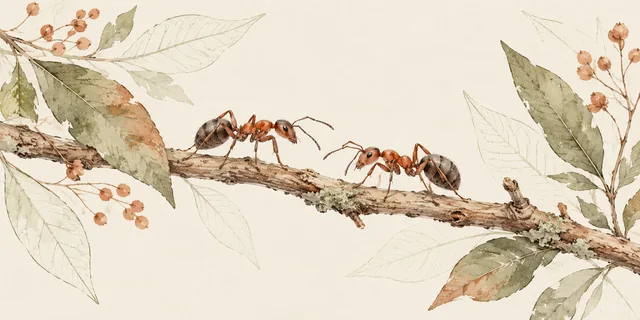 Decorative illustration · not an identification reference
European fire ant is a species example
Maine Extension describes introduced M. rubra as a stinging ant that can spread through colony budding and movement of infested soil or plants. Its account must not be applied to every native Myrmica.
Source: University of Maine Cooperative Extension · European fire ant
In your setup
Do not move a suspected infestation or acquire it for a collection. Seek regional identification and official guidance. Keep an existing captive colony securely contained while resolving its identity.
Do not assume a founding strategy
The invasive-species account is not a complete captive-founding protocol for the genus. It does not justify withholding food from every newly found Myrmica queen.
Source: University of Maine Cooperative Extension · European fire ant
In your setup
For a legally held, identified worker colony, record drinking-water checks and acceptance of small carbohydrate and insect portions. Use tools and enclosure access that avoid direct contact.
Leave heating, winter-rest and queen-number fields undecided until species and origin are established. Record brood and activity changes; do not substitute an invasive species account for your colony’s identity.
Record observations without predicting a flight
In your setup
A winged ant at a nest, a flying swarm and a queen on the ground are different observations. Record the local date, approximate area and identification confidence. This guide does not provide a regional flight forecast.
Build a record for this colony
In your setup
Log dated food responses, reservoir and containment checks, and worker and brood estimates. Mark estimates as estimates and leave unknown facts blank. These notes do not fill in or alter your saved colony profile.
Before acquiring or moving ants
Consult the library’s movement guidance and official sources and the authorities relevant to your location.
Sources and review
Research statements link to their sources. “In your setup” contains practical keeper suggestions, not findings tested for every species. Source check: 2026-10-17.
- University of Maine Cooperative Extension · European fire ant
M. rubra identification, stinging, colony spread and movement in infested material; not a worldwide legal classification.
Keep your own field notes.
Record care, dated counts and what you observe. Species and counts can stay blank when you do not know them.
Open ANTS · not sampleThe current beta is invitation-only. This does not create an account or change your records.