Crematogaster
A raised gaster, a closer look.
Cavity nests and honeydew offer useful context for observing acrobat ants.
Texas A&M genus-level natural history; species identification and captive environmental targets remain separate.
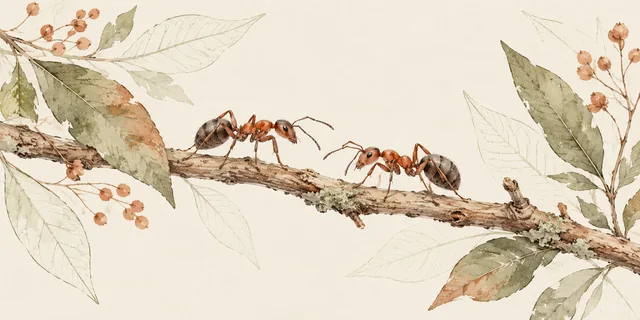 Decorative illustration · not an identification reference
Posture is a clue, not an identification
Texas A&M describes a heart-shaped gaster that acrobat ants can raise over the body. This characteristic does not identify a particular Crematogaster species.
Source: Texas A&M Urban Entomology · Acrobat ants
In your setup
Use a clear worker photo and regional identification help. Do not infer queen number, founding method or seasonal care from posture.
Think beyond the nest material
The account describes nests in decaying wood or other cavities and honeydew as an important food resource. Nesting in wood does not mean eating it.
Source: Texas A&M Urban Entomology · Acrobat ants
In your setup
For an established worker colony, make carbohydrate food, insect food and drinking water accessible in small, manageable portions. Record consumption rather than applying a fixed genus-wide schedule.
Inspect cavity edges and connections for exits. Make moisture changes gradually while checking the reservoir, condensation and where brood is kept. Do not copy a universal humidity percentage from the genus name.
Record observations without predicting a flight
In your setup
A winged ant at a nest, a flying swarm and a queen on the ground are different observations. Record the local date, approximate area and identification confidence. This guide does not provide a regional flight forecast.
Build a record for this colony
In your setup
Log dated food responses, reservoir and containment checks, and worker and brood estimates. Mark estimates as estimates and leave unknown facts blank. These notes do not fill in or alter your saved colony profile.
Before acquiring or moving ants
Consult the library’s movement guidance and official sources and the authorities relevant to your location.
Sources and review
Research statements link to their sources. “In your setup” contains practical keeper suggestions, not findings tested for every species. Source check: 2026-10-17.
- Texas A&M Urban Entomology · Acrobat ants
Genus-level posture, nesting and food observations; pest-management instructions are not reproduced.
Keep your own field notes.
Record care, dated counts and what you observe. Species and counts can stay blank when you do not know them.
Open ANTS · not sampleThe current beta is invitation-only. This does not create an account or change your records.