Brachymyrmex
Small ants. Small details matter.
Begin with identification and containment before choosing a care routine.
A southern U.S. museum account of the ants commonly called B. patagonicus; species naming remains uncertain.
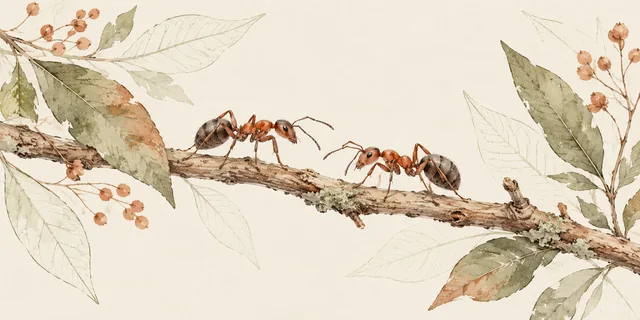 Decorative illustration · not an identification reference
Keep the species label provisional
The museum describes minute workers with nine-segmented antennae. It also warns that the names bruchi, oculatus and patagonicus need clarification. A familiar trade name is not a resolved identification.
Source: Mississippi Entomological Museum · Brachymyrmex patagonicus
In your setup
Record the general origin and photograph workers with a scale. Keep Brachymyrmex sp. when species-level evidence is missing; color alone is insufficient.
Design around the smallest worker
The museum account describes B. patagonicus nesting in soil in several settings, including mixed forest, beach-side sand and suburban mulch. This species account does not establish the habitat or captive requirements of every Brachymyrmex species.
Source: Mississippi Entomological Museum · Brachymyrmex patagonicus
In your setup
Inspect ventilation, tubing connections and feeding access for gaps before introducing a colony. Use manageable food portions and a drinking source that does not leave workers in open liquid.
For a worker colony, record acceptance of carbohydrate and insect food separately. Remove spoiled leftovers with minimal disturbance. Tiny workers make a clean, accessible feeding area especially useful.
Record observations without predicting a flight
In your setup
A winged ant at a nest, a flying swarm and a queen on the ground are different observations. Record the local date, approximate area and identification confidence. This guide does not provide a regional flight forecast.
Build a record for this colony
In your setup
Log dated food responses, reservoir and containment checks, and worker and brood estimates. Mark estimates as estimates and leave unknown facts blank. These notes do not fill in or alter your saved colony profile.
Before acquiring or moving ants
Consult the library’s movement guidance and official sources and the authorities relevant to your location.
Sources and review
Research statements link to their sources. “In your setup” contains practical keeper suggestions, not findings tested for every species. Source check: 2026-10-17.
- Mississippi Entomological Museum · Brachymyrmex patagonicus
Museum identification and distribution account, including uncertainty over names following the 2019 revision.
Keep your own field notes.
Record care, dated counts and what you observe. Species and counts can stay blank when you do not know them.
Open ANTS · not sampleThe current beta is invitation-only. This does not create an account or change your records.