Aphaenogaster
Woodland ants, observed closely.
A starting point for Aphaenogaster care, with the limits of genus-level identification kept visible.
Eastern North American rudis-group natural history; practical care suggestions are not a species-specific protocol.
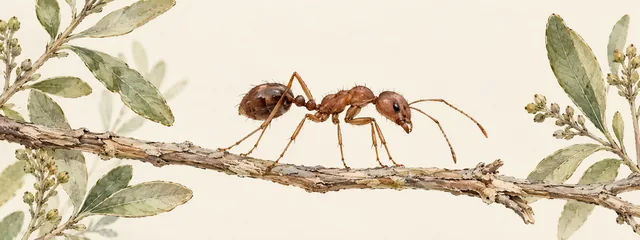 Decorative illustration · not an identification reference
Start with the identification
Aphaenogaster is a genus, not one care profile. The rudis-group literature describes eastern North American woodland populations and unresolved identification problems. Keep an uncertain species label uncertain; this page cannot identify your colony.
Source: Lubertazzi (2012) · Biology and natural history of Aphaenogaster rudis
Watch what reaches the nest
Rudis-group field observations include small invertebrates, elaiosome-bearing seeds and liquid foods. Some Aphaenogaster species carry food-soaked debris back to the nest. That does not make them seed-only feeders, or establish that the genus lacks a crop.
Source: Lubertazzi (2012) · Biology and natural history of Aphaenogaster rudis · Módra and colleagues (2020) · Protective behavior or true tool use?
In your setup
For a worker colony, offer a small, manageable food portion and record whether it was actually accepted. Keep drinking water available separately. Avoid open pools of sticky liquid and pesticide-exposed prey.
Choose portions and cleanup timing from consumption and spoilage in your setup. A feeding interval in a guide should not silently become an automatic care plan.
Seasonal history matters
The reviewed rudis-group populations have a seasonal cycle. Geographic origin affects timing. Evidence suggesting claustral founding by single queens in this group is not a genus-wide rule.
Source: Lubertazzi (2012) · Biology and natural history of Aphaenogaster rudis
In your setup
Do not choose a refrigerator temperature, a winter-rest duration or a heating target from the genus name alone. Identify the species and origin, review suitable evidence, and record measured nest conditions and brood changes.
A flight report is an observation
The Connecticut account inferred flight timing from the disappearance of winged ants from nests. It did not directly observe the mating flights. That inference is not a flight calendar for every region.
Source: Lubertazzi (2012) · Biology and natural history of Aphaenogaster rudis
In your setup
For your own report, record what you saw, the local calendar date and identification confidence. Keep an approximate area rather than a home address. ANTS flight reports require sign-in and review.
Build your colony’s own record
In your setup
Useful entries include food offered and accepted, reservoir checks, worker and brood estimates, nest conditions and seasonal changes. Unknown counts can stay blank; an estimate should stay labeled as an estimate. Nothing on this page changes your saved colony profile.
Before acquiring or moving ants
Consult the library’s movement guidance and official sources and the authorities relevant to your location.
Sources and review
Research statements link to their sources. “In your setup” contains practical keeper suggestions, not findings tested for every species. Source check: 2026-10-16.
- Lubertazzi (2012) · Biology and natural history of Aphaenogaster rudis
Rudis-group field observations, founding evidence, diet, taxonomy limits and seasonal cycle.
- Módra and colleagues (2020) · Protective behavior or true tool use?
Experiments on liquid-food transport in A. subterranea; not a test of every Aphaenogaster species.
Keep your own field notes.
Record care, dated counts and what you observe. Species and counts can stay blank when you do not know them.
Open ANTS · not sampleThe current beta is invitation-only. This does not create an account or change your records.